Day 43 「差」が生まれる科学-なぜ成熟する人と、止まる人がいるのか The Science Behind the Difference
[シリーズ構造] 柱E|自律的な判断
本稿では、なぜある人は成熟し、ある人は停滞するのかという「差」の科学を解説します。成長は年齢や経験年数ではなく、学び → フィードバック → 反省 のサイクルと、心理的安全性・アイデンティティの柔軟性・認知的余裕といった条件によって決まることを示します。これが判断力の質的転換を生む鍵です。
▶ シリーズ概要: シリーズ全体マップ:人間のしなやかさ ― サイバー判断力のために
▶ 柱E|習慣と自律 関連記事:
- Day 17|なぜ瞬時の判断が命運を分けるのか
- Day 18|自律的判断 ― 繰り返しが生む精度
- Day 19|データから知恵へ ― 時間短縮
- Day 34 | 自律的な判断をどこまで信じていいのか
- Day 35 | 記憶のアーキテクチャ
- Day 36 | 長期記憶の三種類
- Day 37 | 記憶がつくる「自律的な判断力」
- Day 38 | 自律的判断力を鍛える どう記憶が直感を作るのか
- Day 39 | 初心者から熟練者へ - スキル習得の5段階
- Day 40 | なぜ、成長する人と、変わらないままの人がいるのか
- Day 41 | 成長する人と、同じ場所にとどまる人
- Day 42 | プロフェッショナルとしての「社会性スキル」
- Day 43 | 「差」が生まれる科学
「差」が生まれる科学―なぜ成熟する人と、止まる人がいるのか
なぜ Sarah は確実に成熟し、Michael は何年も足踏みを続けたのか。
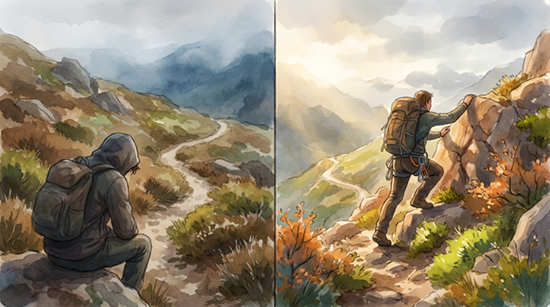
年齢と成熟 同じ道には見えても、歩き方はまったく違う
成熟のスピードは年齢で決まりません。しかし、年齢はどのように成熟していくかを大きく形づくります。
大切なのは年齢そのものではなく、経験をどう活かし、どう手放し、新しい環境へ「持ち替えられるか」。
人生の各ステージには、独自の強みと盲点があります。
- 22-28歳:柔軟性とデジタル感覚は高いが、パターン蓄積が少なく、枠組みを「そのまま」当てはめがち。
- 30-40歳:横断的なパターン認識が強まる一方で、「手放すこと」が難しくなる。
- 40-50歳:組織知とシステム感覚は深いが、新技術への適応は遅れやすい。
- 50-60歳:戦略眼と修羅場対応力は鋭いが、AIやDevSecOpsなど文化変化のスピードに追われる。
- 60歳以降:圧倒的なパターン認識と発信力を持つが、再学習には意識的なエネルギーが必要。
年齢は天井を決めるものではなく、軌道を形づくるだけ。
共通するのはただ一つ。新しい会社、業界、技術に入る瞬間、私たちは一度、「高度な初心者(Advanced Beginner)」に戻るということ。
成熟を左右するのは、年齢でも知能でもなく、学ぶ → 手放す → 適応する → ふり返るというメタスキルです。
これを回すだけの心理的安全性、アイデンティティの柔軟性、認知的余裕があるとき、成熟は一気に加速します。逆にそれが欠けると、どれほど才能があっても停滞します。
Sarah は成熟し、Michael は止まった理由-Dreyfus モデルから見る3つの転換
同じ年齢、同じ仕事量でも、まったく違う成長曲線を描くことがあります。それを説明するのが Dreyfus モデルです。成熟とは、年数ではなく "質の転換" です。
- 抽象的なルール → 文脈で判断する力へ
Sarah は、「同じルールでも状況次第で優先度も意味も変わる」ことを早く理解しました。Michael はルールをそのまま適用し、ニュアンスを取りこぼしていきました。
- 受け身の観察者 → 当事者としての関与へ
成長は、感情の伴った「自分ごと化」から動き始めます。Sarah は結果に責任を持ち、フィードバックを求め、失敗も学びに変えた。Michael は「タスク処理」にとどまり、リスク判断としての重みを感じられなかった。
- 分析的判断 → 直観的な判断(System 2 → System 1)へ
繰り返しの経験とフィードバックが蓄積すると、判断は自動化されていきます。Sarah は多様な経験を意図的に取り込み、直観の"道具箱"を育てた。Michael は経験の幅が狭く、キャリブレーションも不足し、いつまでも「時間がかかる判断」に留まった。
これらの転換は、時間が経ったから起きるわけではない。学習・フィードバック・内省・感情的オーナーシップ―これらが重なったときに初めて起きる「質的な変化」です。
技術的成長・人間的成長を支える3つのプロセス
どの年代でも、成熟する人は同じサイクルを回しています。
学習 → フィードバック → 反省(Reflection)
この循環が人の成長を支えます。
インポスター症候群-成長が止まる人と進む人
Sarah も Michael も、不安と自己否定感に苦しんでいました。
でも反応が違いました。
- Michael:質問を避け、フィードバックを避け、挑戦を避けた。
- Sarah:質問し、助けを求め、困難を"学び"として受け止めた。
違ったのは性格ではありません。置かれた状況でした。
- Sarah:心理的安全性があり、心の余裕があり、トラウマがなかった。
- Michael:喪失経験、威圧的文化、再失敗への恐怖を抱えていた。
インポスター症候群そのものは成長を止めません。止めるのは回避行動(Avoidance) です。
成熟を阻む5つの心理メカニズム
成熟を加速させるのも、止めるのも、実はとても個人的です。
- 組織の硬直性
長年同じ組織にいるほど、学んだ"正しさ"が新環境で邪魔になることがあります。
- 強制的なキャリア転換と、癒えていない喪失感
メンタルエネルギーが悲しみに奪われると、学習も反省も動かなくなる。
- 家庭・健康・金銭問題による認知的負荷
「生きるだけで精一杯」の時期には、成熟は一時停止します。
- 心理的安全性の低い文化
質問が罰され、ミスが嘲笑される環境では、誰も学べません。
- アイデンティティの脅威
新しい領域に入った瞬間に「自分は誰だ?」が揺らぐと、防衛反応が成長を止めてしまう。
成熟を支える2つの土台
- 意図的な学習の仕組み
学ぶ → フィードバックを受ける → 内省する
- 心理的な準備状態
情緒の安定、認知的余裕、アイデンティティの柔軟性、好奇心を許す文化。
この2つがそろったとき、年齢を問わず、人は一気に伸びます。どちらかが欠けると、優秀さとは無関係に停滞します。
Sarah と Michael の違いは、能力ではありませんでした。
「成熟が起きるための条件」が揃っていたかどうか。それが、ただ歳を重ねる人と、職業人として成熟していく人の決定的な違いなのです。
-------
[Series Structure] Pillar E | Autonomous Judgment
This article explains the science behind why some professionals mature while others stagnate. It shows that progression isn't determined by age or time but by how individuals cycle through learning → feedback → reflection and cultivate psychological safety, identity flexibility, and cognitive bandwidth. These conditions enable the qualitative shifts in judgment that differentiate true growth from mere aging.
▶ Series overview: Series Map -- Human Flexibility for Cyber Judgment
▶ Other posts in Pillar E (Habit & Autonomy):
- Day 17 | Why Instant Judgment Can Make or Break Outcomes
- Day 18 | Autonomous Judgment -- When Mastery Becomes Movement
- Day 19 | From Data to Wisdom -- Shortening the Long Path
- Day 34 | When to Trust Our Autonomous Judgment
- Day 35 | The Architecture of Memory
- Day 36 | The Three Types of Long-Term Memory
- Day 37 | How Memory Creates Autonomous Judgment
- Day 38 | Building Our Autonomous Judgment Capacity
- Day 39 | From Novice to Expert - The Five Stages of Skill Acquisition
- Day 40 | Why Some People Progress and Others Stay the Same - The Story of Sarah
- Day 41 | Some People Progress and Others Stay the Same - Michael's Story
- Day 42 | the Hidden Dimension -Professional Social Skills
- Day 43 | The Science Behind the Difference
The Science Behind the Difference
Why do some people, like Sarah, mature while others, like Michael, stagnate for years? This isn't about two individuals--it's about the psychological mechanisms governing judgment development.
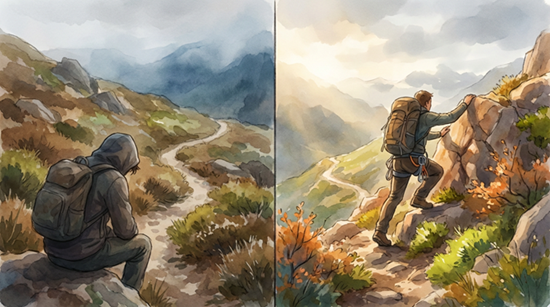
Age vs. Maturation: Different Paths, Same Destination
Age doesn't determine how fast someone matures--but it profoundly shapes how they mature.
What matters most is not chronology, but how individuals leverage, transfer, and unlearn experience when entering new domains, organizations, or security paradigms.
Across careers, each life stage brings its own strengths and blind spots:
- Early Career (22-28): high cognitive flexibility, digital fluency, and willingness to experiment, but limited pattern libraries and a tendency to apply frameworks too literally.
- Early Mid-Career (30-40): strong cross-domain pattern recognition and emotional regulation, but increased risk aversion and resistance to unlearning.
- Late Mid-Career (40-50): deep organizational wisdom and systems thinking, but slower adjustment to new technologies and heightened identity sensitivity when juniors outperform them technically.
- Late Career (50-60): strategic perspective and crisis leadership, yet challenged by rapid technical and cultural shifts such as AI-driven threats or DevSecOps adoption.
- Second Career (60+): unmatched pattern recognition and communication gravitas, but a steep technical relearning curve, possible age bias, and the need for deliberate energy management.
Age shapes the trajectory, not the ceiling.Across all stages:
- Early-career professionals grow through raw experience and rapid experimentation.
- Mid-career professionals accelerate when they can transfer their patterns while unlearning outdated ones.
- Late-career professionals excel through strategic insight--but must retrain technically and redefine identity to stay adaptive.
- Second-career professionals bring powerful judgment--but need supportive environments to rebuild fluency.
Every transition--new company, new industry, new technology--briefly drops everyone back to Advanced Beginner.
The true differentiator is not age, intelligence, or tenure.
It is the meta-skill of: learning → unlearning → adapting → reflecting
When psychological conditions support this cycle--safety, identity flexibility, cognitive bandwidth--maturation accelerates.
When they don't, even the most talented professionals plateau.
Why Sarah Matured and Michael Didn't: The Dreyfus Model
Understanding age differences explains how people start, but the real question is why two people at the same stage can take completely different developmental paths.
he Dreyfus model shows that maturation depends on making three qualitative shifts in judgment, not on accumulating years.
- From Abstract Rules → Situated Context
Mature professionals learn that rules only gain meaning in context: urgency depends on asset criticality, remediation timelines differ by exposure, and communication must shift between executives and engineers. Sarah internalized this early; Michael followed rules literally, missing the nuance that judgment requires.
- From Detached Observation → Involved Performance
Growth requires emotional engagement. Sarah sought feedback, owned outcomes, and let both success and failure shape her learning. Michael remained a spectator--treating security tasks as compliance checkboxes rather than real-world risk decisions--so his growth stalled.
- From Analytical → Intuitive (System 2 → System 1)
With deliberate practice, patterns move from conscious effort to automatic recognition. Sarah built this library through repeated feedback and reflection, enabling fast, accurate intuition in both technical and social decisions. Michael never built enough varied experience or sought enough calibration for intuition to emerge, leaving him in slow, effortful reasoning mode.
These transitions don't happen because time passes- they happen because learning, feedback, reflection, and emotional ownership compound into expertise. Sarah embraced these processes. Michael avoided them.
That is the difference between aging in a role and maturing in a profession.
The Three Essential Processes Behind Technical and Social Growth
Across all ages, one principle is constant: maturation comes from deliberate practice, not time. Those who grow consistently cycle through three processes--learning, feedback, and reflection--shaped to their strengths and blind spots.
Impostor Syndrome: Why Sarah Grew and Michael Didn't
Both experienced impostor syndrome, but responded differently:
- Michael hid: avoided questions, feedback, challenges, and admitting when he was stuck.
- Sarah leaned in: asked questions, sought feedback, embraced hard problems, and framed struggles as learning.
The difference wasn't personality--it was context.
Sarah had psychological safety, cognitive bandwidth, and no recent trauma.
Michael faced unprocessed loss, a threatening culture, and fear of failing again.
Impostor syndrome doesn't stop growth. Avoidance does--especially when combined with grief, fear, overload, or toxic environments.
Beyond Impostor Syndrome- Psychological Barriers to Maturation
Impostor syndrome affects many professionals, but it is only one factor shaping whether people grow or stagnate. Several deeper psychological and situational barriers can either amplify or block the deliberate-practice cycle of learning, feedback, and reflection.
- Organizational Rigidity
Long tenure in a single organization can create deep expertise but narrow thinking. When people move into new environments, old mental models clash with new realities, making unlearning harder than learning. This rigidity blocks curiosity, dismisses feedback, and turns reflection into nostalgia.
- Involuntary Transitions & Unprocessed Grief
Layoffs, closures, or forced exits often produce hidden grief and identity loss. When emotional energy is spent on mourning, there is little left for learning, seeking feedback, or honest reflection. People become physically present but mentally anchored to their previous role.
- Personal Life Crises & Cognitive Overload
Illness, caregiving, financial strain, or burnout consume the cognitive bandwidth required for growth. Survival mode shuts down exploration, experimentation, and introspection. Capability remains--but maturation pauses until stability returns.
- Toxic Cultures & Low Psychological Safety
In environments where questions are punished and mistakes are ridiculed, learning becomes dangerous. People avoid feedback to stay safe, hide gaps, and stop reflecting because it is too painful. Culture can override even strong motivation.
- Identity Threats & Status Loss
When experts enter new domains and suddenly feel like novices, ego protection kicks in. Defensiveness blocks learning, feedback feels like attack, and reflection becomes self-justification. Without identity flexibility, even brilliant professionals stall.
The Two Foundations of Maturation
Professional growth depends on two interlocking systems:
- Deliberate Practice Architecture
Learning → Feedback → Reflection
- Psychological Readiness
Emotional stability, cognitive bandwidth, identity flexibility, and a culture that rewards curiosity.
When both are present, maturation accelerates at any age.
When either is compromised, even the most talented professionals can stall.
This is the real difference between Sarah and Michael--not intellect or effort, but the presence (or absence) of supportive conditions that make deliberate practice possible.
References
Ashford, S. J., & Black, J. S. (1996). Proactivity during organizational entry: The role of desire for control. Journal of Applied Psychology, 81(3), 199-214. https://doi.org/10.1037/0021-9010.81.3.199
Avolio, B. J., Waldman, D. A., & McDaniel, M. A. (1990). Age and work performance in nonmanagerial jobs: The effects of experience and occupational type. Academy of Management Journal, 33(2), 407-422. https://doi.org/10.2307/256331
Baltes, P. B., & Baltes, M. M. (1990). Psychological perspectives on successful aging: The model of selective optimization with compensation. In P. B. Baltes & M. M. Baltes (Eds.), Successful aging: Perspectives from the behavioral sciences (pp. 1-34). Cambridge University Press.
Baumeister, R. F., Bratslavsky, E., Muraven, M., & Tice, D. M. (1998). Ego depletion: Is the active self a limited resource? Journal of Personality and Social Psychology, 74(5), 1252-1265. https://doi.org/10.1037/0022-3514.74.5.1252
Bridges, W. (1991). Managing transitions: Making the most of change. Addison-Wesley.
Dreyfus, H. L., & Dreyfus, S. E. (1980). A five-stage model of the mental activities involved in directed skill acquisition (Report No. ORC-80-2). University of California, Berkeley, Operations Research Center.
Dreyfus, H. L., & Dreyfus, S. E. (2005). Peripheral vision: Expertise in real world contexts. Organization Studies, 26(5), 779-792. https://doi.org/10.1177/0170840605053102
Edmondson, A. C. (1999). Psychological safety and learning behavior in work teams. Administrative Science Quarterly, 44(2), 350-383. https://doi.org/10.2307/2666999
Edmondson, A. C. (2018). The fearless organization: Creating psychological safety in the workplace for learning, innovation, and growth. Wiley.
Ericsson, K. A., Krampe, R. T., & Tesch-Römer, C. (1993). The role of deliberate practice in the acquisition of expert performance. Psychological Review, 100(3), 363-406. https://doi.org/10.1037/0033-295X.100.3.363
Kahneman, D. (2011). Thinking, fast and slow. Farrar, Straus and Giroux.
Kanfer, R., & Ackerman, P. L. (2004). Aging, adult development, and work motivation. Academy of Management Review, 29(3), 440-458. https://doi.org/10.5465/amr.2004.13670969
Mezirow, J. (1991). Transformative dimensions of adult learning. Jossey-Bass.
Ng, T. W. H., & Feldman, D. C. (2012). Evaluating six common stereotypes about older workers with meta-analytical data. Personnel Psychology, 65(4), 821-858. https://doi.org/10.1111/peps.12003
Schlossberg, N. K. (1981). A model for analyzing human adaptation to transition. The Counseling Psychologist, 9(2), 2-18. https://doi.org/10.1177/001100008100900202
Sturman, M. C. (2003). Searching for the inverted U-shaped relationship between time and performance: Meta-analyses of the experience/performance, tenure/performance, and age/performance relationships. Journal of Management, 29(5), 609-640. https://doi.org/10.1016/S0149-2063(03)00028-X